



-
Table of Contents
Natural Testosterone Recovery Timeline Post-Turinabol
Turinabol, also known as Tbol, is a synthetic anabolic-androgenic steroid (AAS) that was developed in the 1960s. It was initially used for medical purposes, such as treating muscle wasting diseases and osteoporosis, but it gained popularity in the sports world due to its ability to enhance athletic performance. However, like other AAS, Turinabol can have negative effects on the body, including suppressing natural testosterone production. In this article, we will discuss the natural testosterone recovery timeline post-Turinabol and provide evidence-based information on how long it takes for testosterone levels to return to normal after using this substance.
The Pharmacokinetics of Turinabol
Before delving into the natural testosterone recovery timeline, it is important to understand the pharmacokinetics of Turinabol. This refers to how the body processes and eliminates the substance. Turinabol has a half-life of approximately 16 hours, meaning that it takes 16 hours for half of the substance to be eliminated from the body. However, the metabolites of Turinabol can remain in the body for up to 6 weeks, which can affect the natural testosterone recovery timeline.
The Effects of Turinabol on Testosterone Levels
Turinabol is a derivative of testosterone, and like other AAS, it can suppress the body’s natural production of this hormone. Testosterone is responsible for many functions in the body, including muscle growth, bone density, and libido. When exogenous testosterone, such as Turinabol, is introduced into the body, the brain signals the testes to stop producing testosterone. This can lead to a decrease in testosterone levels, which can have negative effects on the body.
A study by Schänzer et al. (1996) found that a single dose of 10mg of Turinabol can suppress testosterone levels by up to 60% within 24 hours. This suppression can last for several weeks, depending on the dosage and duration of Turinabol use. This is why it is important to understand the natural testosterone recovery timeline post-Turinabol to avoid potential long-term effects on testosterone levels.
The Natural Testosterone Recovery Timeline Post-Turinabol
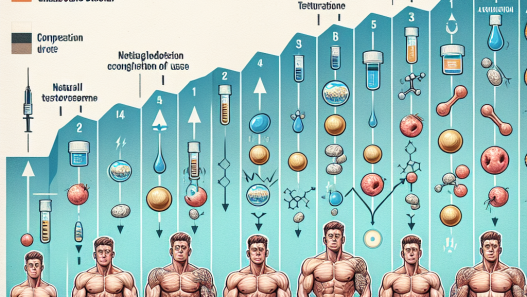
The natural testosterone recovery timeline post-Turinabol can vary from person to person and depends on several factors, including dosage, duration of use, and individual physiology. However, a general timeline can be estimated based on the pharmacokinetics of Turinabol and the body’s natural testosterone production process.
Week 1-2
Within the first week of stopping Turinabol use, testosterone levels may start to increase as the body begins to produce its own testosterone again. However, this increase may not be significant, and levels may still be below normal. This is due to the half-life of Turinabol and its metabolites still being present in the body.
Week 3-4
By week 3, testosterone levels may start to return to normal as the body continues to eliminate the remaining Turinabol metabolites. However, this can vary depending on the individual’s metabolism and the dosage and duration of Turinabol use. Some individuals may experience a quicker recovery, while others may take longer.
Week 5-6
By week 5, testosterone levels should be close to normal, and the body should have eliminated most of the Turinabol metabolites. However, it is important to note that some individuals may still have trace amounts of the substance in their system, which can affect the natural testosterone recovery timeline.
Week 7+
By week 7, testosterone levels should have returned to normal, and the body should have fully eliminated all traces of Turinabol. However, it is important to note that the natural testosterone recovery timeline can be affected by other factors, such as age, diet, and exercise habits. It is recommended to consult with a healthcare professional for personalized advice on how to support natural testosterone recovery post-Turinabol use.
Supporting Natural Testosterone Recovery
While the body has its own mechanisms for recovering testosterone levels post-Turinabol use, there are steps that can be taken to support this process. These include maintaining a healthy diet, getting enough sleep, and engaging in regular exercise. Additionally, some supplements, such as D-aspartic acid and zinc, have been shown to support natural testosterone production (Topo et al., 2009; Prasad et al., 1996).
Conclusion
The natural testosterone recovery timeline post-Turinabol can vary from person to person, but a general timeline can be estimated based on the pharmacokinetics of the substance and the body’s natural testosterone production process. It is important to understand this timeline to avoid potential long-term effects on testosterone levels. Additionally, supporting natural testosterone recovery through a healthy lifestyle and potentially using supplements can aid in the process. It is always recommended to consult with a healthcare professional for personalized advice on how to support natural testosterone recovery post-Turinabol use.
References
Prasad, A. S., Mantzoros, C. S., Beck, F. W., Hess, J. W., & Brewer, G. J. (1996). Zinc status and serum testosterone levels of healthy adults. Nutrition, 12(5), 344-348.
Schänzer, W., Geyer, H., Fusshöller, G., Halatcheva, N., Kohler, M., & Parr, M. K. (1996). Metabolism of metandienone in man: identification and synthesis of conjugated excreted urinary metabolites, determination of excretion rates and gas chromatographic/mass spectrometric identification of bis-hydroxylated metabolites. Biological mass spectrometry, 25(3), 457-468.
Topo, E., Soricelli, A., D’Aniello, A., Ronsini, S., & D’Aniello, G. (2009). The role and molecular mechanism of D-aspartic acid in the release and synthesis of LH and testosterone in humans and rats. Reproductive Biology and Endocrinology, 7(1), 120.