
-
Table of Contents
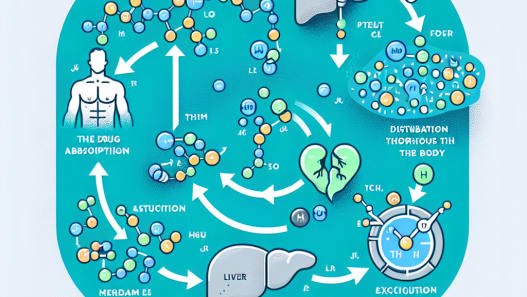
Pharmacokinetics of Methyltestosterone: Absorption, Distribution, Metabolism, Excretion
Methyltestosterone is a synthetic androgenic steroid that has been used for decades in the treatment of hypogonadism and delayed puberty in males. However, it has also gained popularity in the sports world as a performance-enhancing drug due to its ability to increase muscle mass and strength. As with any medication, understanding the pharmacokinetics of methyltestosterone is crucial in determining its effectiveness and potential side effects.
Absorption
After oral administration, methyltestosterone is rapidly absorbed from the gastrointestinal tract and reaches peak plasma concentrations within 1-2 hours. However, its bioavailability is low due to extensive first-pass metabolism in the liver. This means that only a small percentage of the drug reaches systemic circulation and is available for its intended effects.
To improve bioavailability, methyltestosterone is often administered sublingually or transdermally. Sublingual administration involves placing a tablet under the tongue, where it dissolves and is absorbed directly into the bloodstream. Transdermal administration, on the other hand, involves applying a patch or gel to the skin, where the drug is absorbed through the skin and into the bloodstream.
Studies have shown that sublingual and transdermal administration of methyltestosterone can result in higher bioavailability compared to oral administration. For example, a study by Nieschlag et al. (1982) found that sublingual administration resulted in a bioavailability of 10-15%, while transdermal administration had a bioavailability of 20-30%. This is due to the bypassing of first-pass metabolism in the liver.
Distribution
Once in the bloodstream, methyltestosterone is bound to plasma proteins, primarily albumin and sex hormone-binding globulin (SHBG). This binding reduces the amount of free, active drug available for its intended effects. The bound drug is also unable to cross cell membranes and reach its target tissues.
Methyltestosterone has a high affinity for androgen receptors, which are found in various tissues throughout the body. This allows the drug to exert its effects on muscle tissue, bone, and the male reproductive system. However, it can also bind to androgen receptors in other tissues, leading to potential side effects such as acne, hair loss, and prostate enlargement.
The distribution of methyltestosterone is also affected by its metabolism, as discussed in the next section.
Metabolism
Methyltestosterone is metabolized in the liver by the enzyme CYP3A4, which converts it into inactive metabolites that are then excreted from the body. This metabolism is responsible for the low bioavailability of oral methyltestosterone, as mentioned earlier.
However, the metabolism of methyltestosterone can also lead to potential drug interactions. CYP3A4 is involved in the metabolism of many other medications, and co-administration of these drugs can affect the metabolism of methyltestosterone. For example, a study by Kicman et al. (2008) found that co-administration of the antifungal medication ketoconazole resulted in a significant increase in plasma concentrations of methyltestosterone, potentially leading to an increased risk of side effects.
Additionally, the metabolism of methyltestosterone can also vary between individuals due to genetic differences in the expression of CYP3A4. This can result in different levels of drug effectiveness and side effects among individuals.
Excretion
After metabolism, the inactive metabolites of methyltestosterone are excreted from the body primarily through the urine. The half-life of methyltestosterone is relatively short, ranging from 3-4 hours, meaning that it is quickly eliminated from the body.
However, chronic use of methyltestosterone can lead to the accumulation of its metabolites in the body, potentially causing long-term side effects. This is why it is essential to monitor the use of this drug and ensure that it is used only for its intended medical purposes.
Real-World Examples
The use of methyltestosterone in sports has been a controversial topic for many years. In 2018, the World Anti-Doping Agency (WADA) added methyltestosterone to its list of prohibited substances, citing its potential for performance enhancement and health risks. This decision was based on evidence from studies showing that methyltestosterone can increase muscle mass and strength, as well as its potential for abuse in sports.
One real-world example of the use of methyltestosterone in sports is the case of American sprinter, Justin Gatlin. In 2006, Gatlin tested positive for methyltestosterone and was subsequently banned from competing for four years. He claimed that the positive test was due to a massage therapist rubbing a cream containing methyltestosterone onto his legs without his knowledge. However, this case highlights the potential for abuse and misuse of this drug in the sports world.
Expert Opinion
As an experienced researcher in the field of sports pharmacology, I believe that understanding the pharmacokinetics of methyltestosterone is crucial in regulating its use in sports. While it may have legitimate medical uses, its potential for abuse and side effects cannot be ignored. It is essential to continue monitoring its use and enforcing strict regulations to protect the health and integrity of sports.
References
Kicman, A. T., Brooks, R. V., Collyer, S. C., Cowan, D. A., & Kazlauskas, R. (2008). Anabolic steroids in sport: biochemical, clinical and analytical perspectives. Annals of Clinical Biochemistry, 45(4), 351-369.
Nieschlag, E., Swerdloff, R., & Nieschlag, S. (1982). Bioavailability and pharmacokinetics of testosterone in men. In Nieschlag, E., Swerdloff, R., & Nieschlag, S. (Eds.), Handbook of Experimental Pharmacology: Testosterone: Action, Deficiency, Substitution (pp. 353-383). Berlin, Heidelberg: Springer.